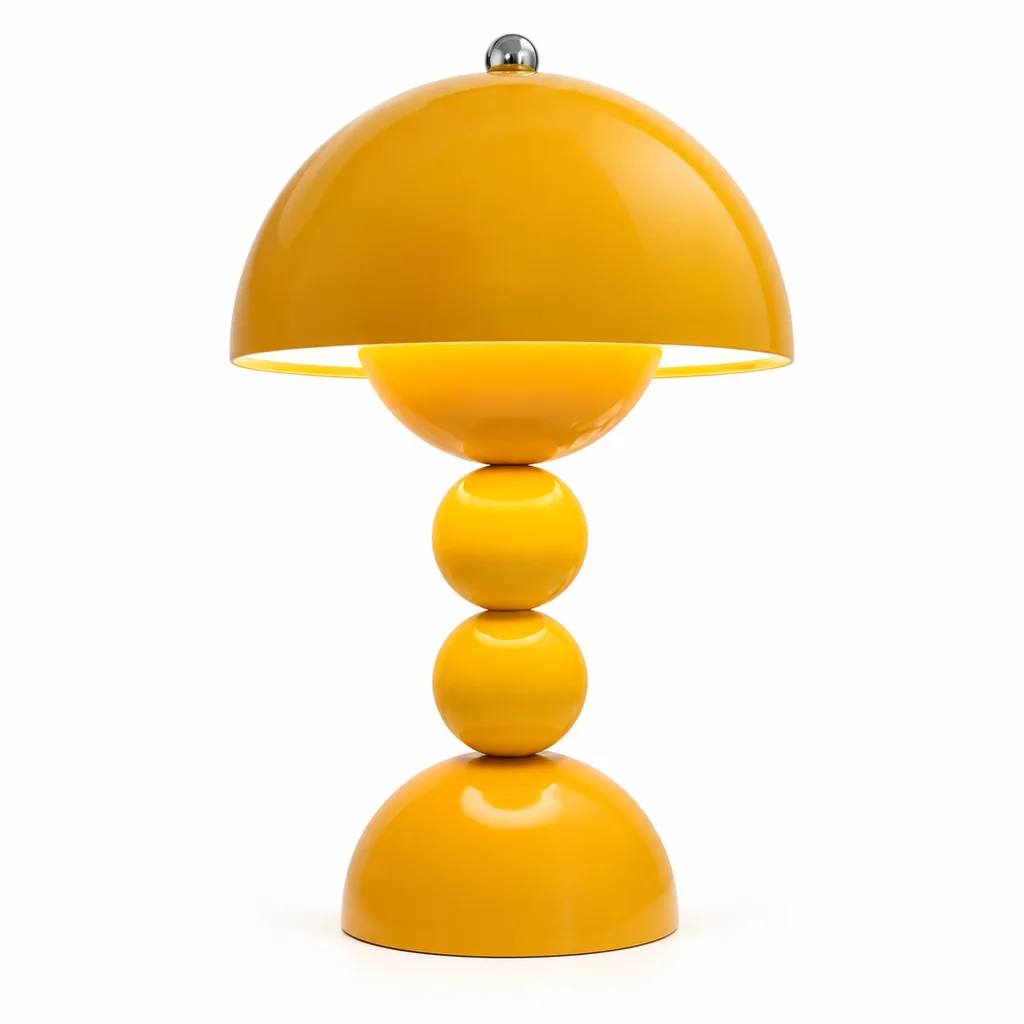
Alabaster gives a warm, soft, low-glare light because the translucent stone scatters light inside the slice and releases it evenly across the surface. Paired with a warm-white LED, it creates a gentle, welcoming atmosphere.
How does alabaster diffuse light?
Light entering alabaster is scattered by the stone's fine crystal structure. Instead of passing straight through, it spreads, and the surface appears to glow rather than shine. Thicker areas look warmer and denser, and thinner areas glow brighter. The result is a gradient of light that looks organic.
Why does it feel warmer than glass?
Glass and plastic shades often show the bulb or create hard edges of brightness. Alabaster hides the source and softens contrast. The eye reads this as calm. That is why alabaster is popular in bedrooms, lounges and dining rooms where people want to relax.
Which light bulb or LED works best?
A warm-white light, commonly in the 2700K to 3000K range, is the usual choice for a cosy tone that flatters the stone's cream and honey colours. LED sources also run cooler than traditional bulbs, which suits a natural stone shade. Check the specification of each fixture for the exact colour temperature and dimming options.
Is alabaster light bright enough?
Alabaster fixtures are designed for ambient and accent lighting. For a space that needs task lighting, such as a desk or kitchen counter, combine alabaster with a dedicated task lamp. Layering ambient and task light is standard practice in interior design.
Explore alabaster lighting · Discuss a lighting project
Related reading