
Alabaster lighting guide
How to Hang Small Alabaster Pendants in a Cluster Over a Kitchen Island
For a kitchen island, hang an odd number of small pendants (3 or 5) at varied drops, with the lowest shade roughly 76–90 cm (30–36 in) above the counter. Space them evenly along the island, keep the group shorter than the island, and give each pendant its own cable so an electrician can set the drops.
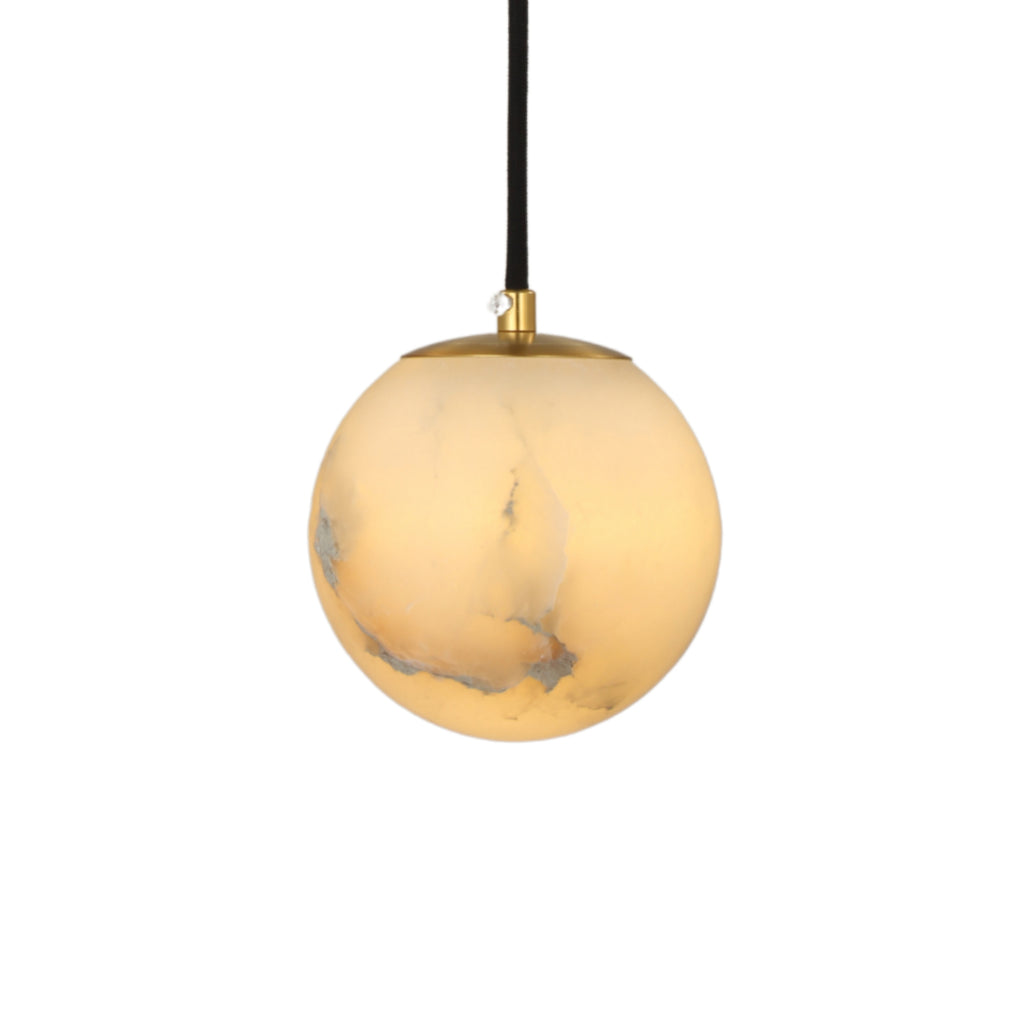
What is a cluster pendant layout?
A cluster uses several small pendants at different heights instead of one large fitting or a straight row. The Lyvane Extra Small Alabaster Globe Pendant is made for it. It is a 100 mm (3.94 in) globe cut from natural Spanish alabaster on a black fabric cable with a brushed brass cap. Its product page recommends groups of three, five or more at varied drop heights over kitchen islands, dining tables and stairwells. Each pendant is supplied as a single unit on its own cable.
How many pendants do you need?
Use an odd number, because odd groups look more natural. As a starting point:
- Island up to about 1.5 m (5 ft): 3 pendants
- Island about 1.8–2.4 m (6–8 ft): 3 to 5 pendants
- Island longer than 2.4 m (8 ft): 5 pendants, or two clusters
The small 100 mm size lets you add or remove one without changing the look.
How high should they hang?
Keep the bottom of the lowest pendant about 76–90 cm (30–36 in) above the countertop so nobody has to look around it. Then stagger the others. A step of 10–15 cm (4–6 in) between neighbours gives the “constellation” effect without looking accidental. Because every Lyvane has its own cable, the electrician can set each drop on site.
How far apart should they be?
For 100 mm globes, 30–45 cm (12–18 in) centre to centre reads as a cluster, while 50–60 cm (20–24 in) starts to read as a row. Keep the outer pendants at least 30 cm (12 in) in from each end of the island, and make the whole group shorter than the island so it feels anchored to it.
Which bulb and how much light?
Lyvane uses a single G9 capsule bulb, sold separately. SPACE361 recommends a warm-white LED G9 of 2700K–3000K to suit the tone of the stone. Small alabaster globes give ambient glow, not food-prep light, so keep under-cabinet or recessed task lighting over the worktop. Also check that G9 bulbs match your mains voltage and that the dimmer suits LED loads.
Other small pendants that cluster well
The range also includes the Lyvane Small, the Elviro slim tube and the Serano pillar pendant. Mix two shapes only if the finish stays the same, for example all brushed brass.
Common mistakes
- Hanging every pendant at the same drop, which looks like a row, not a cluster.
- Hanging them too low, which blocks sightlines across the island.
- Ignoring where the ceiling boxes or joists are before choosing positions.
- Expecting the pendants to replace task lighting.
Frequently asked questions
How many pendants go over an 8 ft island?
Three to five small pendants, with the whole group shorter than the island.
Do the pendants need to match?
Same material and finish matter more than identical shape. Natural alabaster veining will differ between pieces anyway.
Can I use them over a dining table?
Yes. The product page names dining tables as a suitable position.
Is alabaster bright enough over a worktop?
Not for prep. Treat it as ambient light and add task lighting.
Related reading
Keep planning
Related buying guides
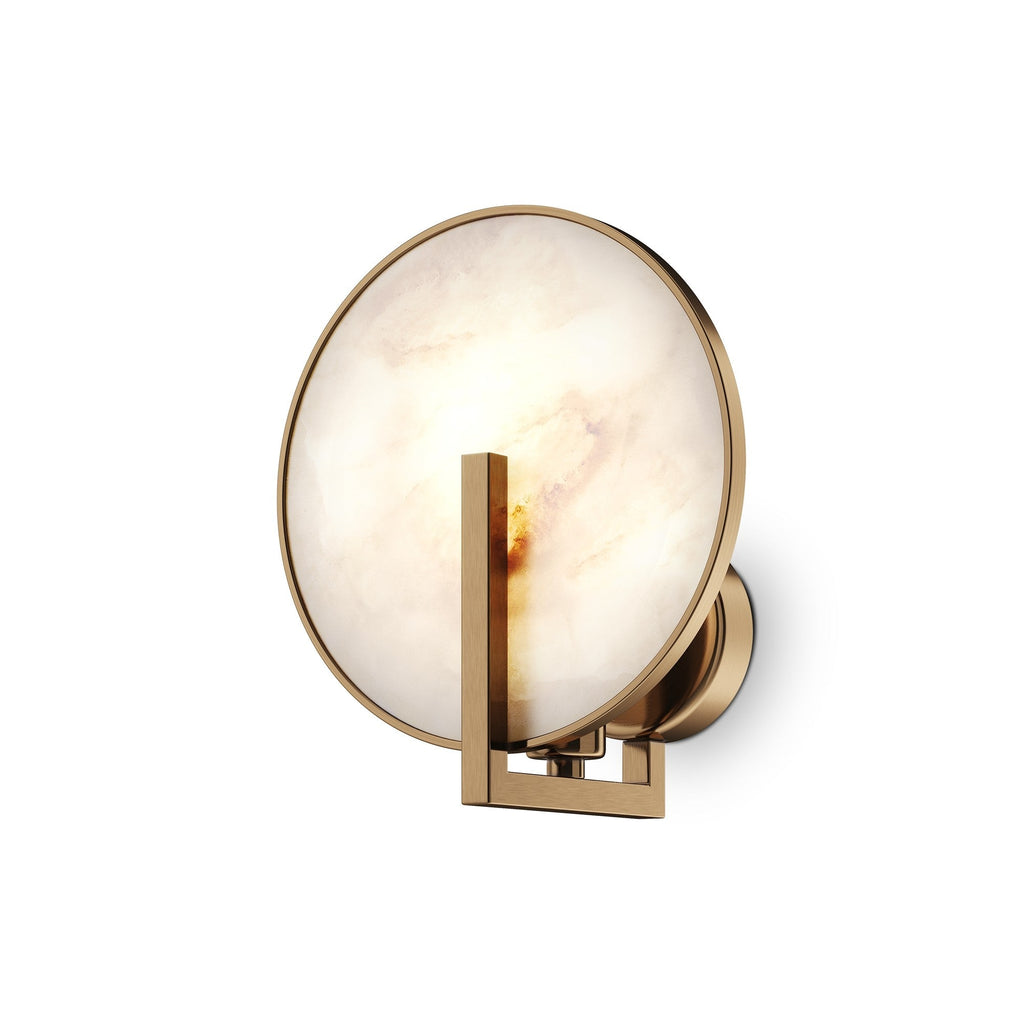 Alabaster lighting guideAlabaster Wall Lights for Bedrooms: Size, Height and Placement GuideAlabaster wall lights suit bedrooms because the stone spreads warm, low-glare light with no visible bulb. Fit one on each side of the bed with the glowing stone about 120–140 cm (47–55 in) above the floor, choose a 2700–3000K light source, and add a separate reading lamp if you read in bed.Read guide →
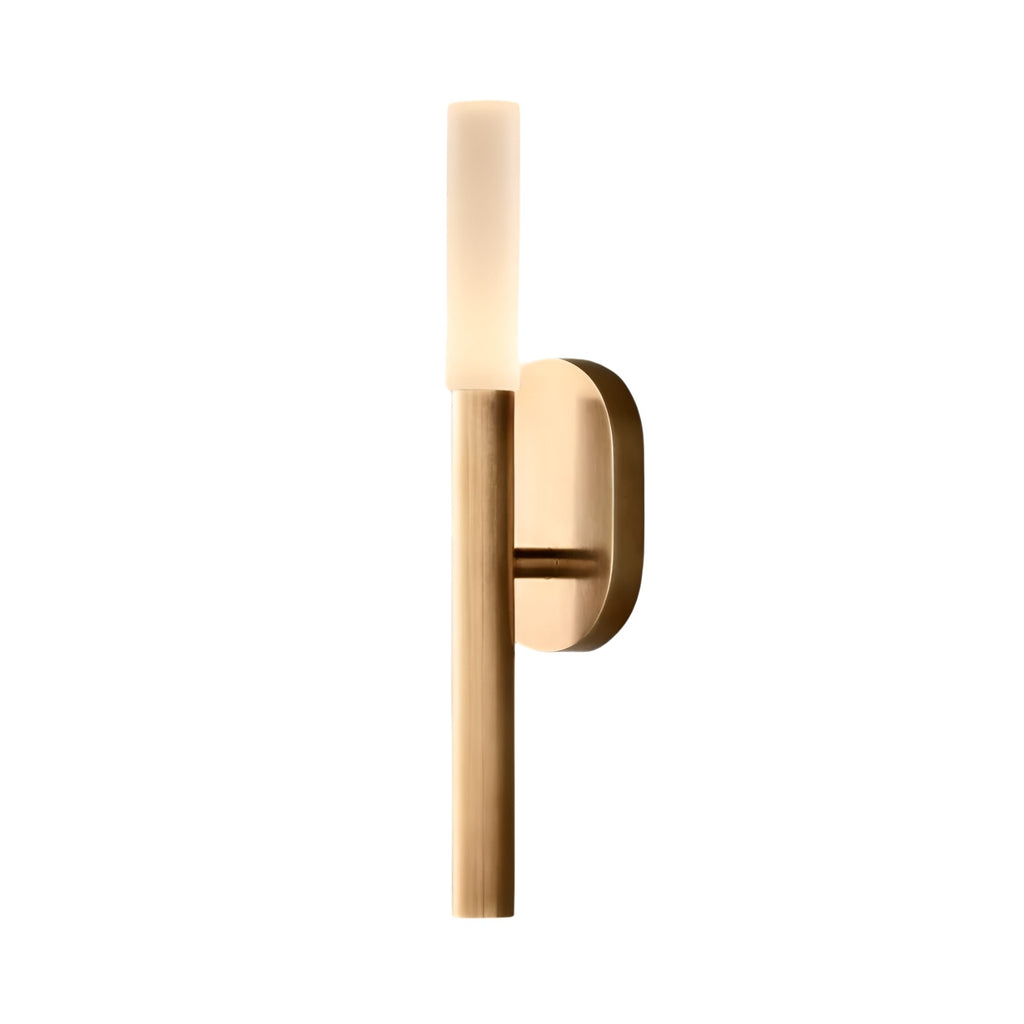 Alabaster lighting guideCan Alabaster Lights Be Used in a Bathroom? IP Ratings ExplainedOnly in the right place. Natural alabaster is porous and softer than marble, and most alabaster fixtures are rated for dry indoor use. Keep them out of showers, baths and splash zones. In a bathroom, use them only outside the zones, or choose a fitting with an explicit IP44 or higher rating for the zone.Read guide →
Alabaster lighting guideWhat Bulb Does an Alabaster Light Need? E14, G9 and Integrated LED ExplainedMost alabaster lights look best with a warm-white LED at 2700–3000K. SPACE361 fittings use three light-source types: integrated LED (nothing to change), E14 bulbs (the Marmo takes up to 40W, with 4–6W LED recommended) and G9 capsule bulbs (the Lyvane). Always match the bulb base, voltage and dimmer.Read guide →
Alabaster lighting guideAlabaster vs Marble vs Onyx vs Travertine: Which Stone Is Best for Lighting?Alabaster is the softest and most translucent of the four, so it glows evenly when lit. Marble is denser and mostly opaque, onyx is translucent with bolder banding, and travertine is warm, porous and usually opaque. Choose alabaster when you want the stone itself to act as the lampshade.Read guide →