
Alabaster lighting guide
Alabaster vs Marble vs Onyx vs Travertine: Which Stone Is Best for Lighting?
Alabaster is the softest and most translucent of the four, so it glows evenly when lit. Marble is denser and mostly opaque, onyx is translucent with bolder banding, and travertine is warm, porous and usually opaque. Choose alabaster when you want the stone itself to act as the lampshade.
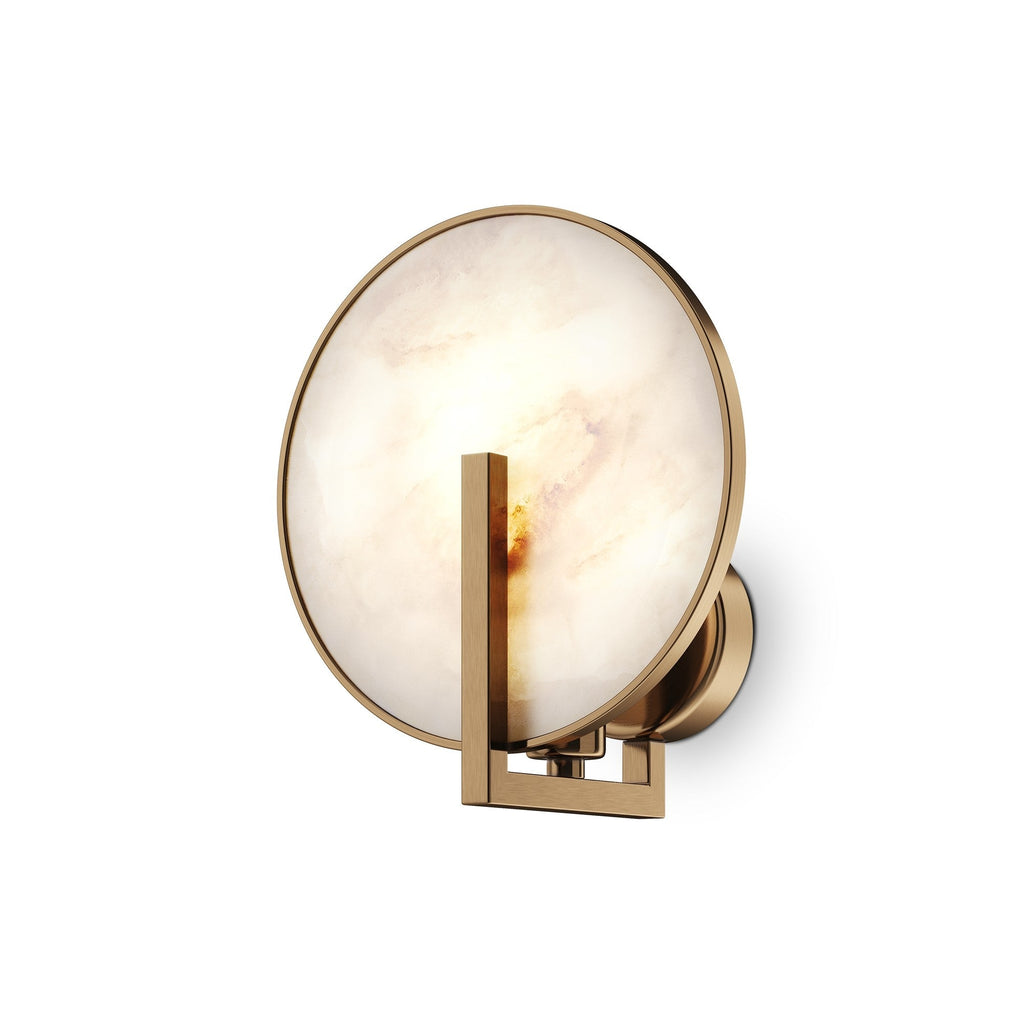
How do the four stones differ?
Hardness figures are approximate Mohs values.
- Alabaster: a fine-grained, very soft stone, most often gypsum (about 2). Thin slices are translucent, with soft clouded veining. Some stone sold as alabaster is actually calcite, so ask your supplier which mineral is used.
- Marble: crystalline calcite or dolomite (about 3–4). Dense and heavy. Light passes only through very thin slices, so marble is usually used for bases and bodies.
- Onyx: banded calcite, often sold as onyx marble (about 3–4). Translucent with strong, dramatic banding.
- Travertine: sedimentary limestone with natural voids (about 3–4). Warm, earthy and opaque, so it is used for lamp bodies and bases, not diffusers.
Which stone glows best?
When the stone is the diffuser, alabaster and onyx are the two to consider. Alabaster gives a softer, more even glow with gentle clouding. Onyx gives a stronger banded pattern. Marble and travertine do not transmit enough light in the thicknesses used for lamp bodies, so they work as sculptural bases with a separate shade.
How do they compare on weight and installation?
Alabaster discs, globes and thin columns stay light for their size. The Marmo wall light, for instance, combines a cut stone disc with a metal frame and is light enough for standard wall fixing into masonry or plasterboard with suitable plugs or anchors. Solid marble or travertine bases are much heavier, which matters for wall fixings and shipping.
Which is easiest to look after?
None of them is maintenance-free.
- Alabaster: softer and porous. Dust with a dry microfibre cloth, use a barely damp cloth with distilled water for marks, and avoid soaking, sprays and chemical cleaners. Keep it indoors.
- Marble and onyx: harder, but acids such as lemon juice or vinegar-based cleaners can etch the surface.
- Travertine: porous with open voids, so it can stain if it is not sealed.
How do they look in a room?
- Alabaster with brass or gold gives a soft, quiet-luxury look. See Alabaster and Brass.
- Marble suits formal, graphic table lamp bases.
- Onyx works as a statement piece in a single focal position.
- Travertine suits relaxed, earthy, Mediterranean-style schemes.
Which should you choose?
- You want the stone to glow: alabaster or onyx.
- You want a heavy sculptural base: marble or travertine.
- You want the softest, most even diffusion: alabaster.
- You want to avoid acid etching: avoid cleaners that are not pH-neutral and keep all natural stone away from harsh products.
To check what you are buying, read Natural Alabaster vs Alabaster Glass Lighting.
Frequently asked questions
Is alabaster the same as marble?
No. Alabaster is a softer stone, usually gypsum, and is far more translucent. Marble is denser and mostly opaque at lamp thicknesses.
Is alabaster more fragile than marble?
Yes. It is softer, so it scratches and chips more easily. Handle it with care and keep it indoors.
Which stone gives the warmest glow?
Alabaster paired with a 2700–3000K warm-white LED gives a very warm, even glow.
Can stone lamps be used outdoors?
Alabaster fittings are for dry indoor use. Check the IP rating on any fitting before using it outside.
Related reading
Keep planning
Related buying guides
Alabaster lighting guideAlabaster Wall Lights for Bedrooms: Size, Height and Placement GuideAlabaster wall lights suit bedrooms because the stone spreads warm, low-glare light with no visible bulb. Fit one on each side of the bed with the glowing stone about 120–140 cm (47–55 in) above the floor, choose a 2700–3000K light source, and add a separate reading lamp if you read in bed.Read guide →
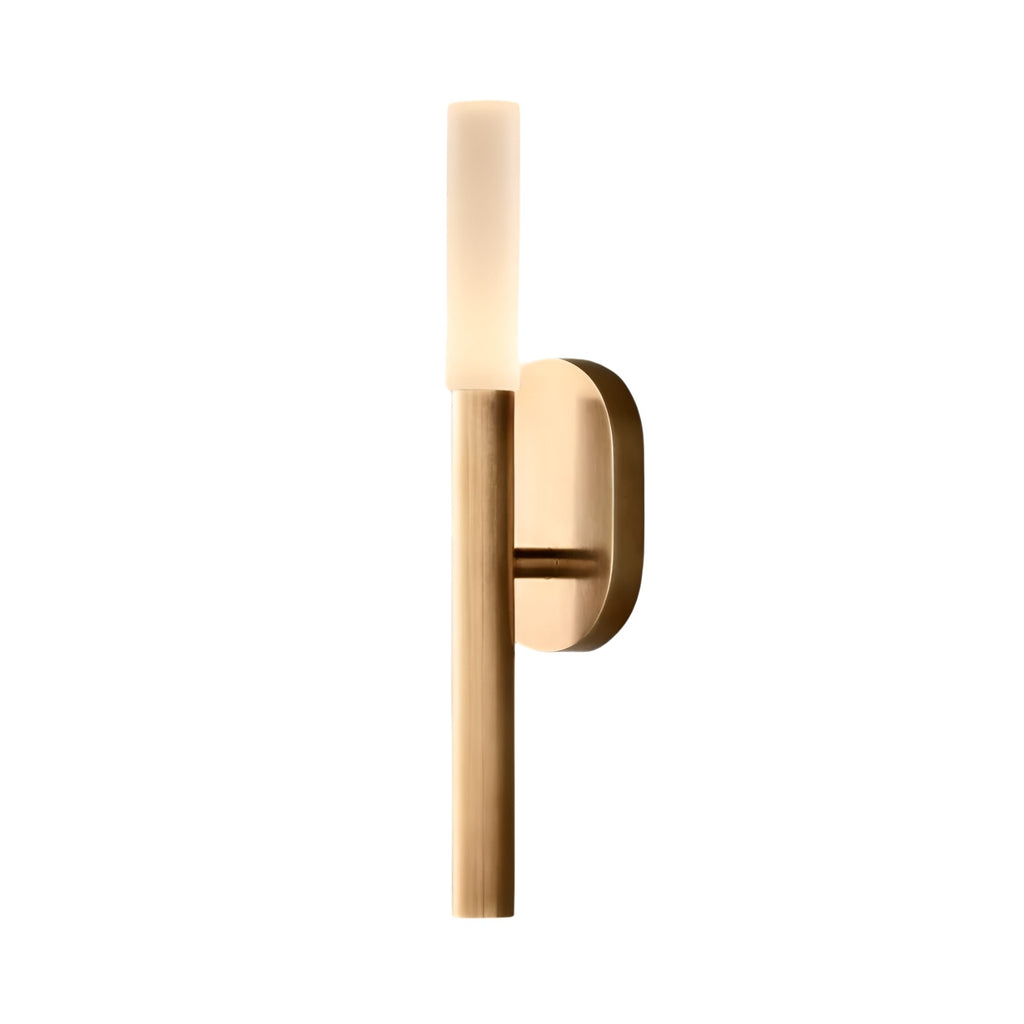 Alabaster lighting guideCan Alabaster Lights Be Used in a Bathroom? IP Ratings ExplainedOnly in the right place. Natural alabaster is porous and softer than marble, and most alabaster fixtures are rated for dry indoor use. Keep them out of showers, baths and splash zones. In a bathroom, use them only outside the zones, or choose a fitting with an explicit IP44 or higher rating for the zone.Read guide →
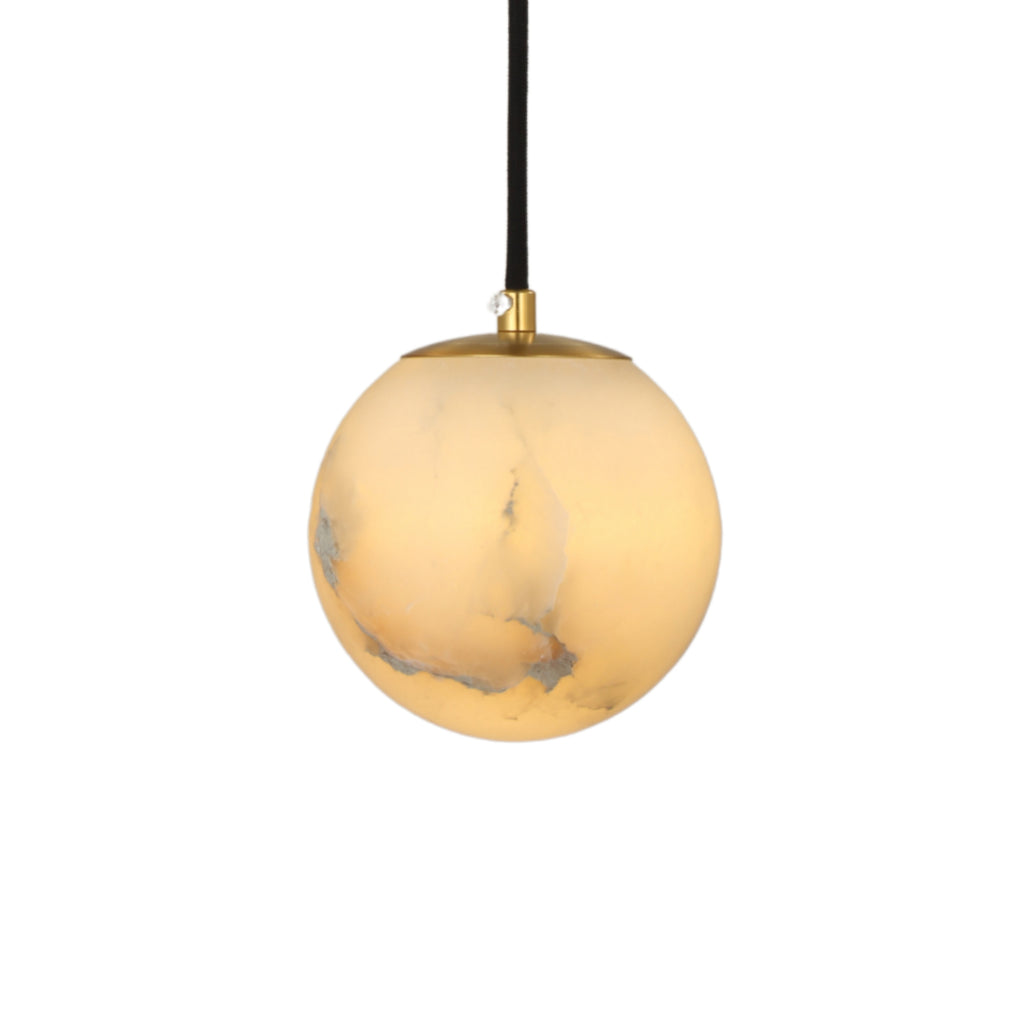 Alabaster lighting guideHow to Hang Small Alabaster Pendants in a Cluster Over a Kitchen IslandFor a kitchen island, hang an odd number of small pendants (3 or 5) at varied drops, with the lowest shade roughly 76–90 cm (30–36 in) above the counter. Space them evenly along the island, keep the group shorter than the island, and give each pendant its own cable so an electrician can set the drops.Read guide →
Alabaster lighting guideWhat Bulb Does an Alabaster Light Need? E14, G9 and Integrated LED ExplainedMost alabaster lights look best with a warm-white LED at 2700–3000K. SPACE361 fittings use three light-source types: integrated LED (nothing to change), E14 bulbs (the Marmo takes up to 40W, with 4–6W LED recommended) and G9 capsule bulbs (the Lyvane). Always match the bulb base, voltage and dimmer.Read guide →