
Alabaster lighting guide
Can Alabaster Lights Be Used in a Bathroom? IP Ratings Explained
Only in the right place. Natural alabaster is porous and softer than marble, and most alabaster fixtures are rated for dry indoor use. Keep them out of showers, baths and splash zones. In a bathroom, use them only outside the zones, or choose a fitting with an explicit IP44 or higher rating for the zone.
What does an IP rating mean?
IP stands for Ingress Protection. The first digit rates protection against solid objects and dust, the second against water. An X means that part is not rated.
- IP20: protected against fingers and objects larger than 12.5 mm, with no protection against water. Dry indoor rooms only.
- IP44: protected against objects larger than 1 mm and against splashing water from any direction. A common minimum for fittings near baths and showers under IEC and UK-style rules.
- IP65: dust-tight and protected against water jets. Typical for exposed outdoor use.
What does SPACE361 say about its own fittings?
- Marmo wall light: IP20. Its product FAQ says it must be installed in dry indoor locations only, away from bathroom zones and outdoor use.
- Elara semi-flush ceiling light: no IP rating specified. Install it only in unzoned areas of a bathroom (outside Zones 0, 1 and 2) or in dry rooms. For bath and shower areas, choose a fitting with an explicit IP44 or higher rating.
- Aurelian wall light: not listed with an IP rating, so it is intended for general interior use rather than bathroom Zones 1 or 2. Contact SPACE361 before ordering if you plan to use it in a bathroom outside the splash zones.
Bathroom zones in plain English
Under IEC 60364-based wiring rules used in the UK and much of Europe, bathrooms are divided into zones. Exact distances differ slightly by country and edition, so confirm locally.
- Zone 0: inside the bath or shower tray. Needs IPX7.
- Zone 1: directly above the bath or shower, up to about 2.25 m. Typically at least IPX4.
- Zone 2: the area around the bath or shower, about 0.6 m. Typically at least IPX4.
- Outside the zones: no specific IP requirement, but humidity still matters.
In the US and Canada, fixtures are listed for dry, damp or wet locations instead of IP codes. Ask your licensed electrician which listing your bathroom needs.
Why does natural stone need extra care?
Alabaster is porous and softer than marble. SPACE361's care guidance is to wipe it gently with a dry, soft microfibre cloth, use a barely damp cloth with distilled water for stubborn marks, and avoid soaking the stone or using household sprays, polishes or chemical cleaners. Steam, splashes and aerosol cleaners all work against that advice, so choose well-ventilated, unzoned positions.
Where can alabaster work near a bathroom?
- A powder room or cloakroom with an extractor fan, with a wall light beside the mirror and outside any splash zone. The Aurelian page mentions flanking a bathroom mirror, subject to zone and IP requirements.
- A dressing area or corridor leading to the bathroom.
- A larger bathroom where the wall is clearly outside Zones 0–2.
What should you use near the shower?
Choose a fitting with an explicit IP44 or higher rating for Zones 1 and 2, then bring alabaster in with a wall light placed outside the zones. That keeps the natural stone texture without putting it in the splash path.
Frequently asked questions
Is IP20 acceptable in a bathroom?
Not within the bathroom zones. IP20 offers no water protection and is for dry indoor rooms only.
Will steam damage an alabaster light?
Steam and constant humidity are not ideal for porous stone. Use good ventilation and keep alabaster outside the shower area.
Can I clean alabaster with bathroom cleaner?
No. Use a dry microfibre cloth, or a barely damp cloth with distilled water. Avoid sprays, polishes and chemical cleaners.
Which IP rating do I need above a bath?
Over a bath or shower (Zone 1) fittings typically need at least IPX4 under IEC-based rules. Confirm local regulations with a qualified electrician.
Related reading
Keep planning
Related buying guides
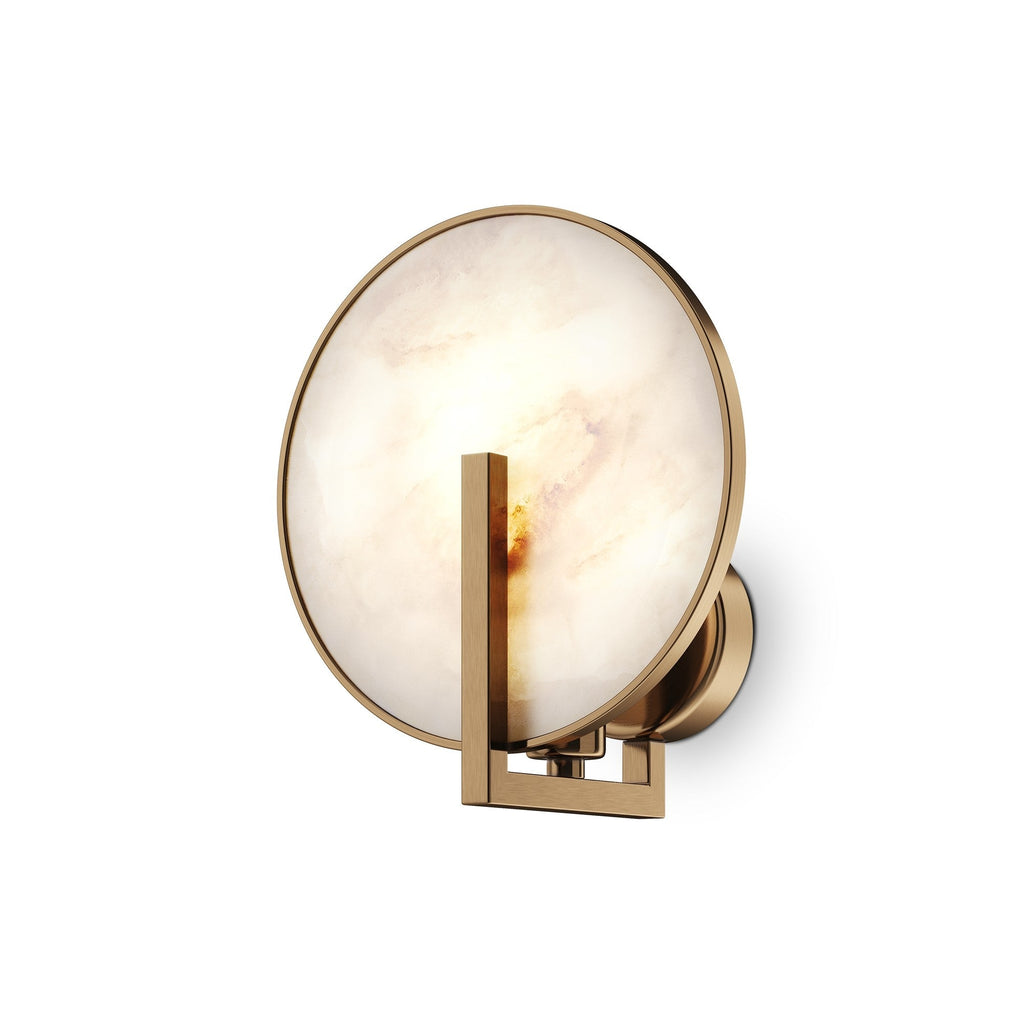 Alabaster lighting guideAlabaster Wall Lights for Bedrooms: Size, Height and Placement GuideAlabaster wall lights suit bedrooms because the stone spreads warm, low-glare light with no visible bulb. Fit one on each side of the bed with the glowing stone about 120–140 cm (47–55 in) above the floor, choose a 2700–3000K light source, and add a separate reading lamp if you read in bed.Read guide →
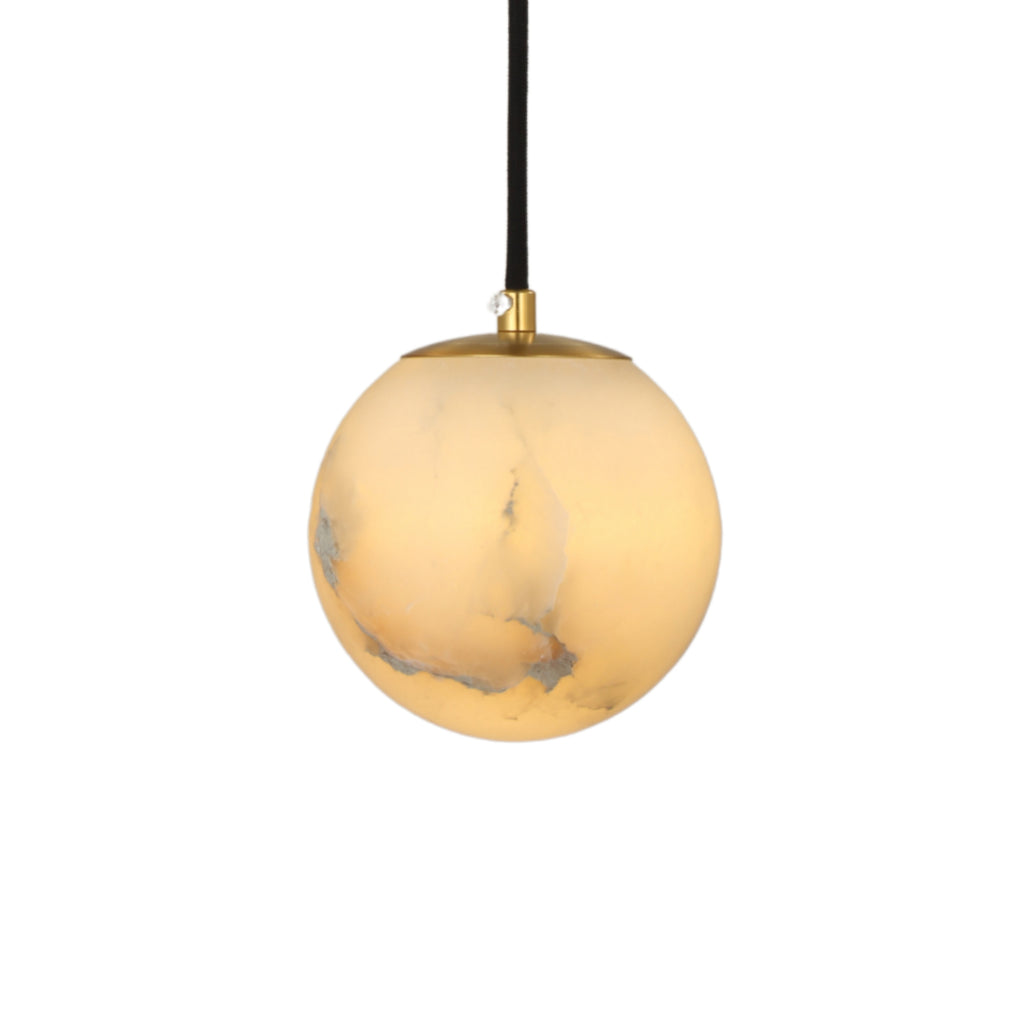 Alabaster lighting guideHow to Hang Small Alabaster Pendants in a Cluster Over a Kitchen IslandFor a kitchen island, hang an odd number of small pendants (3 or 5) at varied drops, with the lowest shade roughly 76–90 cm (30–36 in) above the counter. Space them evenly along the island, keep the group shorter than the island, and give each pendant its own cable so an electrician can set the drops.Read guide →
Alabaster lighting guideWhat Bulb Does an Alabaster Light Need? E14, G9 and Integrated LED ExplainedMost alabaster lights look best with a warm-white LED at 2700–3000K. SPACE361 fittings use three light-source types: integrated LED (nothing to change), E14 bulbs (the Marmo takes up to 40W, with 4–6W LED recommended) and G9 capsule bulbs (the Lyvane). Always match the bulb base, voltage and dimmer.Read guide →
Alabaster lighting guideAlabaster vs Marble vs Onyx vs Travertine: Which Stone Is Best for Lighting?Alabaster is the softest and most translucent of the four, so it glows evenly when lit. Marble is denser and mostly opaque, onyx is translucent with bolder banding, and travertine is warm, porous and usually opaque. Choose alabaster when you want the stone itself to act as the lampshade.Read guide →